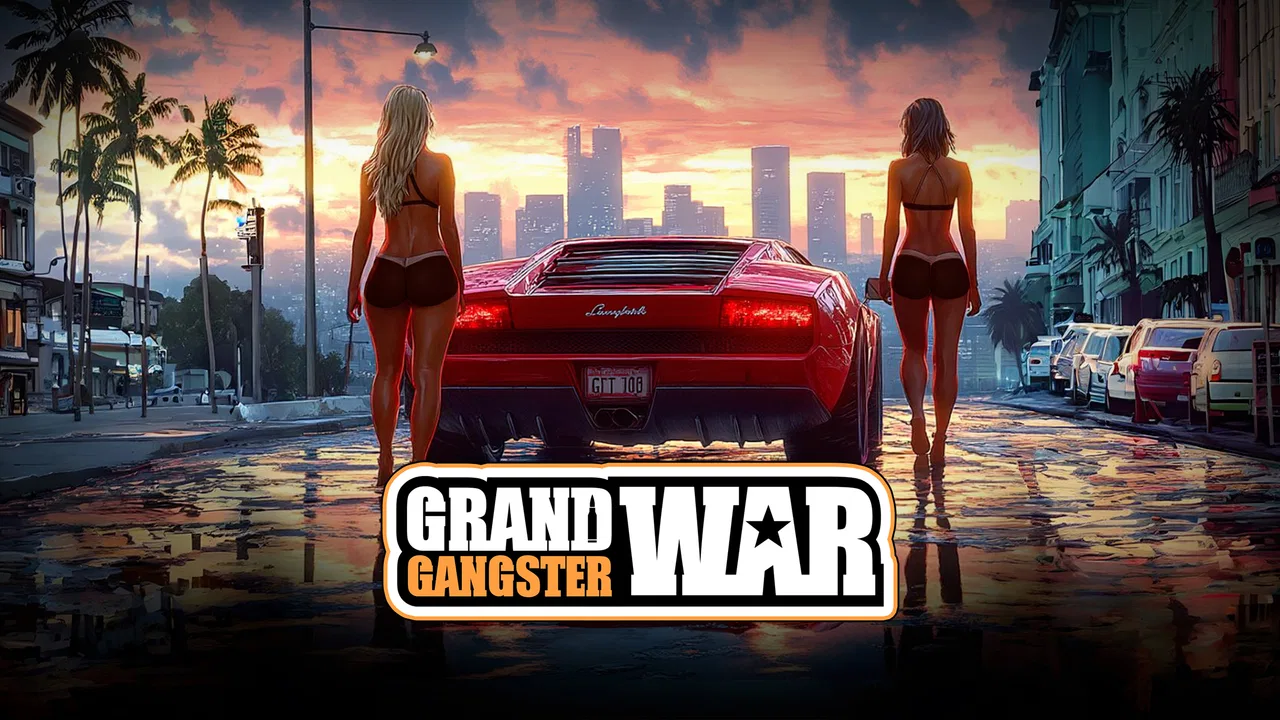
Grand Gangster War
- 4.6
- Rating
- 1.00M
- Installs
- Free
- Price

 Analysis by App-foxy
Grand Gangster War is the kind of strategy game I can imagine opening for a quick check-in and then playing longer than planned. Its central appeal is easy to understand: build influence, make careful choices, and try to turn a small position into something much more powerful. I found the game most interesting when I treated each decision as part of a longer plan rather than simply tapping through the next available action.
That distinction matters because this is not a quiet, numbers-only strategy experience. The gangster theme gives the decisions a more aggressive personality, while the strategy structure asks me to think about timing, growth, and risk. WGAME TECHNOLOGY keeps the presentation focused on that fantasy, and the result is a game aimed at players who enjoy watching a position develop over repeated sessions.
It is free to start, which makes trying it straightforward, but it includes optional purchases ranging from $0.99 to $499.99 per item. I would therefore approach it as a free-to-play game rather than assuming the entire experience is designed around a one-time purchase. Its Teen content rating also makes it more suitable for older players than for young children.
You May Also Like

 Blood Strike: 2.5 Anniversary
Blood Strike’s Loadouts Turn Every Drop Into a Tactical Gamble
A close look at Blood Strike’s custom loadouts: how fast access to signature weapons reshapes its battle royale rhythm, rewards preparation, and narrows the gap between fights.

 Pandora - Music & Podcasts
Pandora’s Music Is Easy to Start, but Harder to Recover
Pandora’s strength is its low-effort path from a seed to a station. Its weak spot is how much confidence it asks you to place in connection, setup, and quiet recovery.

 8 Ball Pool
 Is Built on Rivalries, Rematches, and Routine
A close look at the rivalries, rematches, shared routines, and unanswered safety questions that turn a quick pool match into a persistent mobile community.

 Samsung Music
’s Quiet Strength Is Playing What You Already Own
Its reach comes less from spectacle than from dependable access to a personal library. That simplicity is both the app’s strongest retention engine and its ceiling.

 AccuWeather: Weather Radar
AccuWeather Review: A Quick, Clear Forecast for Everyday Decisions
For everyday plans, the best forecast is the one you can understand quickly. AccuWeather makes rain timing, radar, and local conditions easy to act on, with a few trade-offs.

 Hill Climb Racing
Why Hill Climb Racing Still Turns Crashes Into One More Run
A tiny car, a bumpy hill and one more upgrade: Hill Climb Racing keeps resurfacing because its simple chaos makes every near-miss feel personal.
More From Our News Desk



How the first goals shape the opening hours
The early part of Grand Gangster War works best when I give myself simple goals instead of trying to understand the whole game at once. The useful first question is not “How quickly can I become powerful?” but “Which improvement gives me the clearest next step?” That mindset helps turn the opening into a sequence of manageable decisions.
Strategy games can lose me when they introduce too many currencies, menus, or objectives before I understand why they matter. Here, I recommend taking a moment to connect every early reward with the next thing it enables. If a resource can improve progress, unlock a new option, or strengthen the position I am building, I prefer to spend it only after I know what it contributes to my immediate plan.
This is also where the gangster theme has practical value. It gives the early objectives a sense of direction instead of making them feel like unrelated tasks. I am not just collecting progress for its own sake; I am trying to establish control and prepare for stronger opposition. Even when the individual action is small, the surrounding fantasy makes the next target easier to understand.
My advice to a new player is to avoid spreading improvements too thinly. A broad approach can feel productive because several areas move forward at once, but it may leave the whole position mediocre. A more focused opening usually makes it easier to see whether the chosen route is working. This is one of the first meaningful trade-offs: flexibility feels safe, while concentration tends to create clearer momentum.
The game is particularly approachable for someone who likes strategy but does not want to begin with a complicated competitive rulebook. The early goals provide a reason to continue, and the theme makes the learning process less dry. However, players who want a completely open-ended strategy sandbox may find the initial direction more guided than they prefer.
What progress feels like during a normal session
The strongest progress signal is not a single dramatic victory. It is the growing sense that actions are connected. When I can look at a reward and immediately understand how it supports my next objective, the session feels worthwhile even if I have not reached a major milestone. That connection is important in a game built around gradual expansion.
I also pay attention to whether a new unlock changes my decisions or merely increases a number. A useful unlock should make me reconsider priorities, adjust my timing, or create a reason to revisit an earlier plan. When progression works that way, the game stays strategic instead of becoming a routine reward collection exercise.
One practical habit helped me read the game more clearly: before ending a session, I decide what I want to accomplish next time. It might be improving one weak area, reaching a particular objective, or saving resources for a more meaningful step. This prevents the next visit from becoming aimless tapping and makes short play sessions feel more deliberate.
That approach is especially useful for people playing around a busy schedule. A short session can still have a purpose if I begin with a specific target. In an everyday scenario, I might open the game during a commute or while waiting for an appointment, check the current bottleneck, make one focused improvement, and stop once that decision is complete. The experience fits that pattern better than a game that demands a long uninterrupted campaign.
There is a downside to gradual progress. If the next unlock only offers a small numerical improvement, the excitement can fade. I am more patient with slower pacing when the game gives me a new decision to make, but less patient when the reward feels like a routine increase with no strategic consequence. That is the point where the game’s retention depends heavily on whether the player enjoys incremental development.
Challenge, setbacks, and the shape of the difficulty curve
I prefer strategy games that let difficulty rise through better decisions rather than sudden punishment. Grand Gangster War is most satisfying when I can identify why a setback happened. If I acted too early, neglected an important improvement, or divided resources poorly, the failure becomes useful because I can change my approach next time.
For that reason, I would not rush through every available objective simply because it is visible. A challenge can be a signal to prepare rather than an instruction to attack immediately. Building a stronger base of progress first may take longer, but it gives me more control over the next attempt. This is a valuable habit for new players who are tempted to treat every goal as something that must be completed at once.
The difficulty curve also affects how fair the game feels. A gradual increase keeps early victories meaningful and gives the player time to understand the consequences of each choice. A sharp wall, by contrast, can make earlier progress feel less important, especially if the only apparent answer is to wait or spend. I judge the game most favorably when challenge encourages planning rather than simply slowing the player down.
Another useful tactic is to keep a reserve instead of spending every reward immediately. Saving gives me room to react when a new obstacle appears. It also protects the session from becoming a chain of small purchases or rushed upgrades. I do not see saving as passive play; it is a way of preserving options, which is often more valuable than a minor improvement made too early.
This is where experienced strategy players may have an advantage. They are more likely to recognize opportunity cost and to accept a temporary delay for a stronger later position. Newer players may initially prefer visible progress everywhere, but the game becomes easier to read once they start asking which decision has the greatest effect on the next challenge.
Where the pacing creates retention pressure
Like many free-to-play strategy games, Grand Gangster War has to balance satisfying progress with reasons to return. That balance can be enjoyable when each visit reveals a new objective or gives me a meaningful adjustment to make. It becomes less comfortable when the game’s main reason to return is simply that progress has slowed.
I noticed that the most productive way to handle this kind of pacing is to separate “I have something interesting to do” from “I have something available to collect.” Those are not the same. A collection step may maintain momentum, but a strategic choice is what makes me want to continue. I recommend focusing on the latter whenever possible.
The purchase range deserves attention here. Optional items begin at $0.99 and extend to $499.99 per item, so I would set a personal spending limit before getting deeply invested. Even players who intend to remain free-to-play benefit from deciding in advance how they will respond to a slow section. Waiting, planning, and accepting a slower route are healthier choices than buying simply because the next milestone feels inconveniently distant.
This does not make the game unsuitable for everyone. Some players enjoy a relaxed, long-term progression loop and are comfortable ignoring optional spending. Others want a tightly paced strategy game in which every session produces a substantial change. The first group is more likely to appreciate Grand Gangster War; the second may prefer a premium strategy title or a traditional campaign with a fixed progression path.
I would also skip it if I dislike games that use a crime-themed setting. The theme is not a minor decoration; it shapes the identity of the experience. Players looking for a peaceful city builder, a historical war simulation, or a purely abstract tactics game will probably find a closer match elsewhere.
How it compares with familiar strategy alternatives
Compared with a classic turn-based strategy game, Grand Gangster War feels more focused on ongoing development than on a clearly bounded match. I am not approaching each session as a complete contest that ends with a final score. Instead, I am maintaining a growing position and deciding how to keep it moving forward.
That makes it more convenient than a long-form strategy campaign when I only have a few minutes. I can make a targeted decision and leave without needing to remember an entire battlefield. The trade-off is that the sense of closure may be weaker. Players who enjoy a definite beginning, middle, and end may prefer a campaign-based alternative.
Compared with a casual idle game, this title asks for more attention to priorities. Simply returning and collecting progress is not the most satisfying way to play it. I get more from considering what to strengthen, what to postpone, and which challenge deserves preparation. If I want a game that plays itself almost completely, this would not be my first choice.
Compared with a competitive multiplayer strategy game, it is easier to approach without needing to match the skill or schedule of another person. That is useful for players who prefer personal progress. On the other hand, anyone seeking intense live competition and constant adaptation against human opponents may find the experience less compelling than a dedicated multiplayer alternative.
The best comparison is therefore not “better or worse,” but “what kind of strategy session do I want?” Grand Gangster War suits me when I want a persistent gangster-themed climb with decisions spread across multiple visits. A premium campaign is better when I want predictable pacing and no purchase pressure. A deep competitive game is better when the opponent, rather than the progression loop, is the main source of tension.
Practical habits that make the progression clearer
My first recommendation is to identify the current bottleneck before spending anything. If one weakness is holding back several objectives, improving it may be more valuable than upgrading an area that is already performing adequately. This sounds obvious, but it is easy to overlook when the game presents several attractive improvements at once.
Second, I would keep a small reserve for unexpected difficulty. Spending everything as soon as it appears can create a fragile position. A reserve gives me the freedom to respond instead of forcing me to wait after every setback. This is particularly helpful when I am unsure whether the next challenge will require preparation.
Third, I would use short sessions intentionally. Rather than opening the game without a plan, I choose one task: review the current objective, make the most useful improvement, and stop if the next step is only waiting. This keeps the game from taking over my free time and makes the slower parts easier to tolerate.
Finally, I would treat optional purchases as a convenience rather than as part of the basic strategy. If spending changes how I evaluate every obstacle, the game becomes less enjoyable. Setting boundaries early lets me judge the actual progression loop on its own terms.
On device compatibility, the game supports Android 6.0 and later, so it remains accessible to people using older Android versions. It is currently at version 1.4.10, and the player base is substantial, with over a million installs and a 4.7 average from around twenty-five thousand ratings. Those figures suggest that the game has reached a broad audience, but they do not replace personal taste: the gangster setting and free-to-play pacing remain the deciding factors for me.
My verdict on the long-term progression
Grand Gangster War succeeds when I approach it as a steady strategy routine rather than a race to unlock everything immediately. Its early goals are easy to grasp, its theme gives progress a recognizable identity, and its best moments come from choosing what to improve now versus what to save for later. The game gives casual players a manageable way into strategy while still rewarding more deliberate planning.
Its main weakness is the tension between gradual progress and optional spending. The purchase range means I would recommend clear limits, especially to anyone who is easily tempted by faster advancement. Players who need constant novelty may also lose interest if a later stretch feels more like maintenance than decision-making.
For me, the final recommendation is fairly specific: try it if you enjoy persistent strategy gameplay, crime-themed progression, and short sessions built around incremental goals. Skip it if you want a premium experience with a fixed price, a self-contained campaign, or a purely competitive battlefield. The game is free to start, but its real value depends on whether you enjoy the process of building momentum one considered choice at a time.
WGAME TECHNOLOGY has created a game that is easy to sample but more rewarding when played with restraint. I would recommend beginning slowly, learning which improvements genuinely change the next challenge, and deciding your spending boundaries before the pacing tests your patience. With that approach, Grand Gangster War becomes a more thoughtful experience than its simple premise first suggests.
FAQs for Grand Gangster War
01What type of game is Grand Gangster War?
Grand Gangster War is an open-world action-adventure game where players engage in various criminal activities. Set in a sprawling urban environment, it combines elements of shooting, driving, and strategy. Players can explore the city, complete missions, and build their reputation in the underworld. It's available for both Android and iOS platforms.
02Is Grand Gangster War free to play?
Yes, Grand Gangster War is free to download and play. However, it includes in-app purchases that allow players to buy virtual currency, special items, and upgrades. While these purchases can enhance gameplay, they are not essential for enjoying the game. Players can progress through the game without spending money.
03What are the minimum device requirements for Grand Gangster War?
For Android users, Grand Gangster War requires at least Android version 5.0 and 2GB of RAM for optimal performance. iOS users need iOS 10.0 or later. The game is compatible with both iPhone and iPad devices. Ensure your device has enough storage space, as the game can be resource-intensive.
04Does Grand Gangster War have multiplayer features?
Yes, Grand Gangster War offers multiplayer features, allowing players to connect with friends or compete against others online. Players can join gangs, participate in cooperative missions, or engage in PvP battles. This adds a social aspect to the game, increasing its replayability and enjoyment.
05Are there any parental controls in Grand Gangster War?
Grand Gangster War includes options for parents to manage in-game purchases and control access to multiplayer features. The game is rated for mature audiences due to its violent content. Parents should review these settings to ensure a safe gaming experience for younger players, if applicable.
Pros
- Engaging open-world gameplay.
- Diverse missions and objectives.
- Customizable character options.
- Impressive graphics and effects.
- Smooth controls and mechanics.
Cons
- In-app purchases can be expensive.
- Occasional ads interrupt gameplay.
- Requires a stable internet connection.
- Battery consumption is high.
- Some features need improvement.

Grand Gangster War
Gallery